The Gospel to Saints

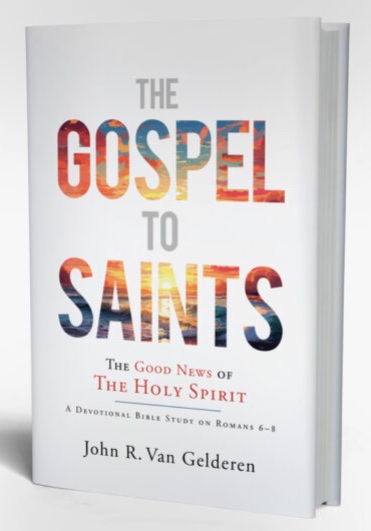
Exchanged Life Counseling applies the message of faith-based sanctification to remedial discipleship and pastoral care. One of the most important passages in the Bible that conveys the message of identification with Christ is Romans chs 6-8. John Van Gelderen of Revival Focus has recently published an excellent exposition of this portion of the Epistle to the Romans. This is from the book’s description:

“Which best describes you: a struggling sinner or a saint reigning in righteousness?
Romans 6–8 is a life-changing portion of Scripture. The sad truth is, many Christians don’t realize it. While Romans 1–5 is the gospel to sinners, showing people the way to salvation in Christ, Romans 6–8 is the gospel to saints, showing believers the way to life in the Spirit.
Just as sinners need the good news of Jesus, so likewise saints need the good news of the Holy Spirit. The gospel to sinners provides freedom from the penalty of sin. The gospel to saints provides freedom from the power of sin. Just as sinners must believe in Jesus, so also saints must believe in the Holy Spirit…” – RevivalFocus.org

This book is now on the GFI certification track reading list. Here are other recommended resources on Romans 6-8.

Romans Verse by Verse, by William R. Newell
https://ccel.org/ccel/newell/romans

The Gospel For the Believer (Exposition of Romans 5-8), by Robert Jones
https://gracenotebook.com/the-gospel-for-the-believer-exposition-of-romans-5-8-chapter-1/
[4 part series]

Dr. John Best’s audio and video teaching
https://grace-fellowship-international.myshopify.com/collections/john-best

“Therefore we were buried with Him through baptism into death, that just as Christ was raised from the dead by the glory of the Father, even so we also should walk in newness of life … knowing this, that our old man was crucified with Him, that the body of sin might be done away with, that we should no longer be slaves of sin. For he who has died has been freed from sin … Now if we died with Christ, we believe that we shall also live with Him, knowing that Christ, having been raised from the dead, dies no more. Death no longer has dominion over Him. For the death that He died, He died to sin once for all; but the life that He lives, He lives to God. Likewise you also, reckon yourselves to be dead indeed to sin, but alive to God in Christ Jesus our Lord.”
Romans 6: 4,6,10,11 NKJV

Chaplaincy Training

.Grace Fellowship International now offers an equipping track for Exchanged Life Chaplaincy.

Chaplaincy is essentially a ministry of presence, offering care and support. This no-strings-attached care may lead to discussing one’s personal relationship with God. The most basic spiritual need is to understand the Gospel and receive the gift of God’s salvation through Christ. Similarly, there may be opportunities to go deeper into the basics of how to resolve personal and spiritual conflicts through discipleship counseling. The GFI credential adds Christ-centered discipleship counseling to the chaplain’s tool kit and mission scope.

In his book, Foundations of Chaplaincy: A Practical Guide, Alan Baker
introduces chaplaincy this way:

“Welcome to the most exciting and fastest-growing segment of specialized ministry: chaplaincy. It is distinct from mainstream pastoral models because the focus is delivering a ‘ministry of presence’ to people outside of a church. While local-church models typically reinforce a wagon-wheel approach, where the pastor remains at the center and the outside community follows the spokes inward, chaplains invert the wagon-wheel model by providing their presence where people live and work along the outer wheel rim. In our current culture, as fewer people identify with a specific religion or attend religious services, Americans may be more likely to meet a chaplain than a local clergy person at a congregation. Chaplaincy is ministry in motion…”

The International Fellowship of Christian Chaplains (IFOC.org) summarizes the role of the chaplain. The chaplain:

  • Ministers in areas of critical incident stress, grief and loss, trauma, and stress management
  • Provides counsel, education, advocacy, life-improvement skills, and recovery training
  • Builds a bridge between the secular and spiritual environments of community life
  • Brings life changing service in every sector of community life, such as health and welfare, education, transitional living, emergency service, and governmental support

One of the advantages of this ministry role is the diversity of contexts where ministry can be offered. Christian Chaplains and Coaching gives this list of ministry examples:

  • Community Chaplaincy
  • Recovery from addictions
  • Jail, prison, and those recently released or on parole
  • Disabled and special needs
  • Troubled teens
  • Sex trafficking victims
  • Hospital
  • Nursing home/assisted living
  • English as a second language
  • PTSD
  • Emergency, crisis, and critical incidents
  • Marriage and family care
  • Military and veterans
  • Police and fire
  • Urban ministry
  • Office and workplace environment
  • Motorcycle ministry
  • Hospice Care

See the Exchanged Life Chaplaincy certification track here.

May this new equipping path be used of the Lord to deploy many men and women as ambassadors of God’s love, gospel, and wisdom.

New Publication: Life in Christ

.
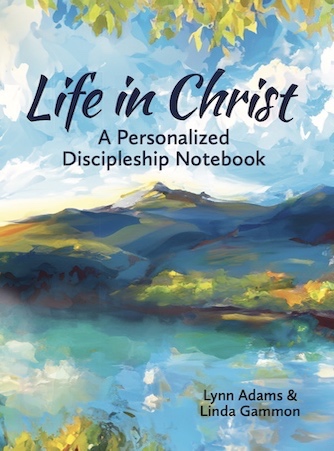
Life in Christ: A Personalized Discipleship Notebook
by Lynn Adams and Linda Gammon
 
This 12 lesson workbook has been field tested for years and recently revised. It is ideal for one-to-one mentoring and small groups for in-depth evaluation, Bible study, and personalized applications.
 

We know grace is the most powerful force in the universe, but why are there so many anxious and depressed Christians? 

Christ is the answer, and the Bible is sufficient, but how do we lay hold of these truths?

The Life in Christ Personalized Discipleship Notebook was designed for this very purpose. The twelve sessions have proven transformational in church and parachurch settings. The notebook contains everything needed: weekly teachings, interactive materials, “Consider This” homework assignments, Scripture verses, and even designated space for written responses. The new discipler may particularly appreciate the structure and ease of sharing in this way.

Here’s What Others Have Discovered

“This 12-week course can and does change lives. It has changed mine. It is not new truth, it is existing truth brought to light. This material uniquely guides the student to come to their own conclusions through the Holy Spirit’s illumination.” –J. S.

“Have you ever experienced burdens beyond your strength, to the point you despaired of living? If you have, where did you seek help? I began this 12-week discipleship course at my local church six years ago. Gradually, my depression lifted, and I experienced joy as a child of God. I understood His transformational grace in a way I had never known before.” –S. A.

“Far beyond knowing that I’ve been forgiven for my sins, the truths presented here are what every Christian needs to know if they sincerely want to abide and find rest for their souls.” –L. E. 

This workbook is a good resource for use by grace disciplers, including GFI Workshop alumni, certified Exchanged Life Counselors, and GFI Guides. It’s available through GFI’s online store or by calling the office at 1-865-429-0450.

The Legacy of Paul Travis

Rev. Paul Andrew Travis, 90, of Hendersonville, NC went to be with the Lord on December 21, 2023. He is survived by his wife of thirty-four years, Joyce Travis.

Paul served as pastor and interim in many states. He spiritually influenced hundreds of lives  through personal and marriage counseling as well as churches, pastors and by his personal testimony and ministries.

Paul was helped by Dr. Solomon’s conference, then was trained in Exchanged Life Counseling through a workshop and internship at Grace Ministries International in Georgia. Two of Paul’s video lectures are in the Online Lectures Series course at www.GraceStudyHall.org

In 2005 Paul and Joyce joined the field staff of Freedom in Christ Ministries (FICM.org). He is the co-author of Grace That Breaks the Chains (originally, Breaking The Bondage of Legalism). 

John Woodward recorded three audio interviews with Paul. They are available here:

Surrendering: Message and Methodology

The yielding of ourselves to God is one of the crucial conditions of victorious Christian living. But we want to keep this in a grace context.

The message

“I beseech you therefore, brethren, by the mercies of God, that you present your bodies a living sacrifice, holy, acceptable to God, which is your reasonable service. And do not be conformed to this world, but be transformed by the renewing of your mind, that you may prove what is that good and acceptable and perfect will of God” (Rom. 12:1,2 NKJV).

Notice that this admonition is to those who have experienced God’s amazing mercy and grace (Rom. 3:1-5:11). This is a response to Christ’s completed work of redemption.

A century ago Samuel Ridout made this observation about surrender:

“The cross is the secret of power. The cross is what we can glory in. It sets us aside, breaks us to pieces, writes upon us the sentence of death, in order that the power of Christ, through the Holy Spirit, may rest upon us. The one who has learned death, who has the sentence of death in himself [2 Cor. 4:10], is the one who will have power.

You are to make a complete surrender of your will, strength, time, talents—all that you are and have to be put upon the altar. But who makes this surrender, and what is the altar? If you make the surrender, it is self surrendering self, a most subtle form of self-righteousness. But when we see it is the cross of our Lord-that cross by which I am, I was crucified, in His death; that “I am crucified with Christ” [Gal. 2:20], when we see this, we find that it is not a question of surrender for me, but of the cross which has set me aside, that Christ may be all. Anything short of the cross only fosters pride…”

So we consider brother Ridout’s questions:

1. Who makes this surrender? Answer: The believer and the empowering Holy Spirit. This cooperation is also seen in Christ’s work on the Cross:

“For if the blood of bulls and goats and the ashes of a heifer, sprinkling the unclean, sanctifies for the purifying of the flesh, how much more shall the blood of Christ, who through the eternal Spirit offered Himself without spot to God, cleanse your conscience from dead works to serve the living God?” (Heb. 9:13,14).

2. What is the altar? Answer: The place of the living sacrifice is spiritual Jerusalem—the Cross of Christ and the empty tomb.

“But God forbid that I should boast except in the cross of our Lord Jesus Christ, by whom the world has been crucified to me, and I to the world. For in Christ Jesus neither circumcision nor uncircumcision avails anything, but a new creation” (Gal. 6:14,15).

The methodology

A few years ago GFI updated Dr. Solomon’s wheel diagrams in the spirit area. Instead of “Total Commitment” as the 5th spiritual blessing, we replaced that term with “new identity.” This makes it consistent with the other grace-based blessings which are bestowed on the believer through the New Birth at salvation (Eph. 1:3).

And we created another wheel diagram about Appropriating Christ as Life. In the soul area we list as a summary, the responses of repent, relinquish, recognize, repent, and rest. Total Surrender is considered here under the term “relinquish.” This diagram is used after the wheel and line as a response. This also fits with the context of Romans: the identification truths (Rom. 5-8) come before the surrender passage of Romans 12:1,2.

Therefore, we see wholehearted and ongoing surrender as essential but in the context of grace, not self-effort, through the enablement of the Holy Spirit.

For more on this topic, see the recent video teaching on Appropriating Christ as Life, and listen to Glimpses of Grace podcast episode #16.

JBW

Shannon’s Testimony

I grew up knowing the Lord, but at fifteen came to know Him in a more personal way that changed my life forever. Im 32 now, and I have followed Him since that day. But, the last year of my life has brought tumultuous and uncertain circumstances. I came to GFI because, though I loved the Lord and wanted to follow Him, I was stuck in patterns of anxiety, confusion, and resistance toward my circumstances. I suddenly began experiencing panic attacks and daily physical anxiety that seemed to control my life. Though I pressed into the Lord for help, I felt unable to reach Him and often a disappointment toward Him. Why was I like this? How could I get out?

I found the Handbook to Happiness” after searching on YouTube for people who God had led out of similar anxiety. The book spoke to my heart and touched heavily on the topic of self”—a principle that the Lord kept highlighting in my life. I had been praying for the Lord to lead me to counseling if that was something He wanted for me. GFI seemed to me a resource that was Scripture based, Holy Spirit driven, and made sense. It felt like the Lord answered my prayer!

After reaching out, I began meeting weekly with Cheryl. I will always be grateful for my time with her. Through her, the Lord helped me see how I was living through my own strength, a life of striving and trying” to be like Jesus—but, of course, always falling short and growing more and more frustrated. Through our time, I learned how God wanted to live through me and the true meaning of surrender. I found comfort in the truth that He uses uncomfortable circumstances, like mine, to bring us into greater surrender which ultimately leads to more intimacy and life in Him.

The Lord has been bringing me to this surrender, and I have found that I am not so afraid anymore. Things that I could not do before because of fear, He is enabling me to do now. If you are in a spot of frustration, fear, and disappointment, like I was, then I highly recommend GFI. For me, it was the truth I needed to begin laying down my self” and looking to Jesus for true life. I am very thankful for Cheryl and her kindness, wisdom, and gentle way of helping me understand. We had a great time chatting and I always looked forward to our time together! She made it so easy for me to be open and honest. Thank you to her and GFI for all your help, encouragement, and resources. I pray your ministry would be blessed as you continue to aid Christians in their walks with Jesus. Heres to exchanging” our life for His!

The Value of Daily Devotionals

One of the important virtues for the Discipleship Counselor as well as the disciple/counselee is a consistent, grace-oriented personal devotional life. This includes the essentials of daily time in God’s Word and prayer.

Another kind of resource that is a helpful supplement is a daily devotional book. This should not take the place of the Scriptures, but can be a beneficial addition.

Here on ELCmatters.org we have a list of recommended daily devotional books. Some are only available in print, others are online, and some are available in both formats.

In his introduction to his compilation of daily readings Miles Stanford wrote,
None But the Hungry Heart is a devotional study. There are twelve sections each containing thirty-one daily portions. The following factors have been considered in arriving at this form of presentation:

  1. A spiritually hungry heart is the requisite for entering into the growth truths of identification with Christ.
  2. Prayerful study on the part of the believer is the means by which the Holy Spirit ministers these truths.
  3. The concentration of the Christ-life truths in brief daily studies facilitates their assimilation.

This resource is conveniently available online at AbideAbove.org
(Keep in mind GFI’s glossary for more precise definitions of “old man,” “sin nature,” etc.)

Although we trust God for a breakthrough as our counselee/disciple discovers and appropriates the gospel of identification with Christ, this process is encouraged and supported by him/her “soaking in” grace and truth daily.

In his forward to the daily devotional volume, His Victorious Indwelling, Nick Harrison observes,

“Today, many Christians are wholly unaware of the spiritual resources they possess in Christ. Nor do most believers in Christ daily experience an awareness of the indwelling presence of the Holy Spirit in their lives. And yet at what time in history has the Christian church and her teachings been so widely disseminated?… Yet for all this exposure, the perception of many is that the depth of our Christian life and witness is perhaps a mile wide, but an inch deep…”

We can say amen to that. Harrison continues,

“God chooses to work on us from the inside out. He wants to live His life through us, by the agency of His Spirit, so that our lives reflect the presence of Christ to those around us. There will indeed be dramatic change in the Christian who purposes to know God and His victorious indwelling – but it will be largely through the process of learning to abide in Christ, rather than instantaneous, divine ‘touch’ from God.” (His Victorious Indwelling, pp. 6,7. Available in paperback and Kindle)

May we continue to sample and use daily devotionals for our edification and so we can coach our disciples in using one as a “homework” resource and for ongoing spiritual growth.

JBW

Five Basic Counseling Skills

Whatever counseling approach one uses, there is a need for basic counseling skills.

Compare this to cooking. Whatever the recipe and ingredients a cook has in mind, cooking skills are needed for preparing food, using utensils, operating a stove or oven, etc. Similarly, there are basic skills that we need keep in mind and develop in Exchanged Life counseling and coaching. (Some of these are identified in the lecture, Counseling Skills, in GFI’s Online Lecture Series course.) 

In this video lecture Fred Antonelli of Basic College Ministries presents five practical counseling principles for counseling young adults on college campuses. He briefly discusses:

1 Learn to listen

2. Be empathetic

3. Know when to triage (refer to a counselor with more training)

4. Don’t be judgmental

5. Keep Jesus the center of your counseling

Although his target audience is college ministry, these principles are basic for other contexts as well.

Pursuing Peace

In September I attended a lecture by Dr. Janeen Davis on Biblical conflict resolution. She uses resources from the ministry Peace Pursuit. This model complements our teaching on The Wisdom of Forgiveness (in The Christ is Life Conference and Dimensions of Forgiving at GraceNotebook.com). Their Quick Start Guide is available at PeacePursuit.org as a free download. They also have a downloadable app to facilitate this process step by step. Dr Davis’ site is www.purposeandpeace.com. I recommend this as a biblical, practical resource for “phase 4” ministry.

peace_pursuit

-JBW

What About Mindfulness?

One of the trends in counseling is the use of “mindfulness.” This sounds compatible with biblical discipleship (such as the need to “renew your mind, Rom. 12:2, etc.), but a closer examination of the philosophy and practice of mindfulness reveals that it is contrary to Christ Centered Counseling.

Dr. Joanna Jackson wrote an excellent article on this topic in The Journal of Biblical Counseling. Here are some excerpts:

Mindfulness has become a buzzword in our modern Western world. It appears on the cover of magazines, in the news, on bestseller lists. It is a go-to treatment in the therapy room, and it is heralded in schools, the military, and businesses alike. It is the antidote to everything from daily worry to clinical depression. Celebrities swear by it, neuroscientists study it, monks practice it, and psychologists are trained in it. And with good reason. An increasing body of research attests measurable benefits for a wide range of physical disorders and psychological distresses. Something in mindfulness is resonating deeply.

In addition to its popularity in the wider world, it has received an increasing level of commitment and following from many Christians who testify to the benefit that mindfulness has been to their own faith, and who recommend its use in therapy and counseling. At the same time, many Christians remain skeptical and cautious about mindfulness, both for themselves and in their roles helping others. So what are we to make of mindfulness? What is it really about? What should we be wary of, and to what degree can we benefit from the insights that mindfulness provides?[1]

See a summary of her article here: Mindfulness_article

A Biblical view of mindfulness would include Scriptures such as these:

“You keep him in perfect peace
 whose mind is stayed on you,
 because he trusts in you.
Trust in the Lord forever,
for the Lord God is an everlasting rock.” Isaiah 26:3,4 ESV

“Finally, brothers, whatever is true, whatever is honorable, whatever is just, whatever is pure, whatever is lovely, whatever is commendable, if there is any excellence, if there is anything worthy of praise, think about these things.” ESV

Dr. Jackson summarized her analysis of secular/Buddhist “mindfulness” in psychotherapy:

Although mindfulness practice contains some common-grace wisdom, we must not be naive in thinking it is easy to engage in mindfulness meditation in a non-Buddhist way. It is incredibly difficult to divorce the techniques of mindfulness from its metaphysical framework. In light of this challenge, I do not advocate “Christian mindfulness,” or efforts to Christianize mindfulness practices for use in counseling. Rather, it is more prudent to let the mindfulness revolution spur Christians on to revive and more fully realize the contemplative resources for living well that are already contained within centuries-old Christian practices.

We have a rich heritage that can teach us the discipline of biblical meditation, psalm-like reflection on our inner lives, the importance of embracing the present moment as God’s precious children, and the need for silence and solitude. Having support for how to do these things in the current context of our individual lives and church communities would be of great value. Herein lies the possibility for developing further resources that are tailored to the challenges our culture presents and the individual struggles that we face.” [1]

________

[1] Joanna Jackson, Journal of Biblical Counseling 33:1 (2019): 25–45. http://www.CCEF.org

[2] For a good downloadable booklet that compares Biblical meditation with eastern meditation, see https://comeandreason.com/meditation-guide/ (Note: Dr. Tim Jennings is a Seventh Day Adventist psychiatrist and author.)

Bracketed content added, J.B.W.