
From Diagnostic Insight to Transformational Truth


“Then Jesus said to those Jews who believed Him, “If you abide in My word, you are My disciples indeed.  And you shall know the truth, and the truth shall make you free… Most assuredly, I say to you, whoever commits sin is a slave of sin.  And a slave does not abide in the house forever, but a son abides forever. Therefore if the Son makes you free, you shall be free indeed” John 8:31-36 NKJV

“And the Word became flesh and dwelt among us, and we beheld His glory, the glory as of the only begotten of the Father, full of grace and truth” (John 1:14 NKJV).

In surveying the effects of mainstream counseling, Jewish-Austrian psychiatrist and holocaust survivor, Viktor Frankl (1905-1997), concluded that “the dream of half a century century has centered around mechanisms to explain, and techniques to heal neurotic diseases. I believe that this dream has been dreamt out.” [1]

E. Staley Jones made this important observation about the limitations of secular counseling:

“Psychiatry has had as its working basis—insight. Give a patient [with mental/emotional illness] ‘insight’ and it will automatically cure him. That has about run its course—it is proving to be near bankruptcy … Why? Because ‘insight,’ knowledge about themselves, won’t cure them. Can’t. For the disease is not lack of insight, it is something else. It is the lack of giving love and receiving love … If he [the patient] began to care about others, that moment he would be on the road to health. It is self-centered, preoccupation that is the disease. No amount of ‘insight’ will cure that unless the insight is accompanied by a self-surrender to God, and outgoingness to man.” [2]

As a missionary, apologist and author, Jones was concerned that even Christian teaching must advance to being incarnational—the word being made flesh—in believers (Gal. 2:20). He continued his critique of mainstream counseling:

“Education, psychiatry, religious education, and non-directive counseling have for the most part gone on the assumption that it is the truth, the insight, that sets people free. That assumption is now proving sterile … Unless the truth leads to the Truth, the Son who makes you free, is not transforming. It is informing, but not transforming. For to be introduced to the Son, the Truth, means surrender, allegiance, obedience, life-committal —that is transforming, it sets men free. It issues in conversion – Christian conversion, regeneration [and sanctification] … [that] takes place when self surrenders itself as the center to Christ, the Truth, the Son, as the center. Then the Son makes you free.” [3] 

Because Biblical counseling emphasizes renewing the mind (Rom. 12:2) it has some similarities to cognitive therapy. But Christ-centered counseling is more than an educational experience. Even “Exchanged Life” teaching will miss the goal of potential transformation if it neglects an experiential appropriation of Christ as Lord, Life, Liberator and Leader. Teaching can share information, but only the Holy Spirit filling the believer can give inner healing, sanctification and potential transformation (Eph. 5:18; 2 Cor. 3:17,18).

J.B.W.

_______________

[1] Viktor Frankl, Man’s Search for Meaning.   Douglas T. Kenrick noted, “Victor Frankl was a neurologist and psychologist who had been imprisoned in a Nazi concentration camp, and lost his bride to the gas chambers … Frankl developed the idea of self-transcendence, emphasizing that the more you can devote yourself to another person or an important cause, the more you can transcend the miseries and anxieties of everyday life.” – Shepherd.com

[2] E. Stanley Jones, The Word Became Flesh (Abington Press, 1963), 276.

[3] Jones, 280.

Surrender as Response

In the path to personal victory, and in Exchanged Life Counseling, a vital checkpoint is Total Surrender. In the GFI Conference and Workshop we use the Total Commitment page that lists relationships and rights that need to be relinquished to God. Of course, this commitment is not made in an attempt to be saved, because Jesus’ work on the Cross is finished and the believer is saved by grace through faith apart from works (Eph. 2:8,9). Nor is this commitment required to maintain our salvation. Rather it surrender is our reasonable response to “the mercies of God.” The biblical text we use on the Total Commitment page is Romans 12:1,2. This is the Amplified Classic translation:
“I appeal to you therefore, brethren, and beg of you in view of [all] the mercies of God, to make a decisive dedication of your bodies [presenting all your members and faculties] as a living sacrifice, holy (devoted, consecrated) and well pleasing to God, which is your reasonable (rational, intelligent) service and spiritual worship. Do not be conformed to this world (this age), [fashioned after and adapted to its external, superficial customs], but be transformed (changed) by the [entire] renewal of your mind [by its new ideals and its new attitude], so that you may prove [for yourselves] what is the good and acceptable and perfect will of God…”
The aorist tense and imperative mood in Greek mean that we are exhorted to make a wholehearted presentation of ourselves to our Redeemer. There is also a need for continual surrender as well (Luke 9:23), but that intentional daily cooperation should flow from one’s grace-based salvation, identification and consecration experiences.
In Handbook to Happiness, Dr. Solomon listed “Total Commitment” as point 5 in the spiritual blessings section of the wheel diagram. A few years ago, we replaced this term with “identity.” Total surrender principle is now addressed in the recently “Appropriation” wheel diagram as “Relinquishment.” (Thank you to Jeff Barbieri for helping develop to Appropriation diagram. Chuck approved of these updates in 2019.)
Why this change in the Total Commitment sequence and diagrams?
1. Notice that the other four blessings in the spirit area of the believer’s wheel diagram are grace-gifts at salvation. Although Dr. Solomon (and I) had surrender experiences years before experientially entering into identification, focusing on surrender before teaching the Gospel of identification can be misunderstood as self-effort rededication.
2. Notice that Romans 12:1,2 comes after Romans 5:12-8:39 [the Gospel of identification] in the flow of that epistle.
Writers from yesteryear confirm the importance of consecration as a response to a greater appreciation of the gospel:
“God asks us to present our bodies as living sacrifices to Him (Rom. 12:1). Until we have done this, there is nothing else we can do. But notice that this exhortation comes after Romans Six. There is a reason for this order—crucifixion comes before consecration. Uncrucified self refuses to be consecrated (to say nothing of God’s refusing to accept it). That is why so many people with all sincerity walk down the aisles again and again, consecrating uncrucified self to God.” (quoted by Miles Stanford)
“We must learn to know God and to love Him. Then we will not have to struggle to move into consecration. The heart will lead into it. A lover never thinks about giving himself to a loved one. He cannot do otherwise. He loves to do it. Is there not here a key to consecration?” -C.A.Coates
One of the most appreciated resources we use when exploring surrender is The Pineapple Story (video and book) by Otto Koning. It’s both funny and convicting (IBLP.org)
Laura Story’s music video is an example of surrender: “Open Hands.”
So as you write and share your “three Cross Testimony” remember to describe surrender to God’s will as a grace-based decision. And as you guide your disciple/counselee, discern how to convey surrender as a grateful response, enabled by the Holy Spirit, in light of the wonderful blessings of redemption and identification.
J.B.W.

Zan Poonen: Biblical Exposition

about-zacpoonenZac Poonen has been serving the Lord in India for over 50 years as a Bible-teacher. He has responsibility for a number of churches in India and abroad and has written more than 30 books  See https://www.cfcindia.com/zac-poonen

Recently I heard a message that brother Poonen preached on Galatians 2:20.  There are some aspects interpreted differently from GFI. For example, Zac explains the cross of Galatians 2:20 in terms of self-denial (Luke 9:23), where we explain “I have been crucified with Christ” as referring to the truth Romans 6:6— the believer’s identification with Christ in His death (Col 3:9). But he presents many valuable insights into the daily application of the Cross in the life of the believer. The video message is here:

https://archive.org/details/siv_The_Christ_Life_For_The_Self_Life_by_Zac_Poonen

At BiblicalPsychology.net I posted another message where brother Poonen speaks about man as spirit, soul and body: Seeing the Real Jesus.

Nevertheless, I Live

by Janet Stone

IPs_139n the early 1970s, I was a new mother struggling with serious health problems and trying to care for an infant when I could hardly get through the day without collapsing. As my daughter was learning to crawl I was so ill I would barricade a section in the living room with pillows and cushions and lie on the couch. Although we now know I have an immune deficiency and a neuromuscular disease that contributed to the chronic health problems, at the time I thought I just wasn’t trying hard enough and that I was a terrible mother.

My husband was serving in the Air Force and we were stationed in South Dakota, far from family and friends. Our church became our family but did not understand my struggles and I was sinking deeper into despair about my situation. We went home to Arizona for Christmas that year and I went to a local doctor to see if we could figure out what was wrong. He put me on a “stomach relaxer” which turned out to be a strong tranquilizer, and I was in a car accident when someone pulled in front of me and I couldn’t respond quickly enough. After finding out what the medication actually was, I determined I would not take anything for the anxiety because of the safety issues.

My mother had heard good things about a local Christian psychologist and made an appointment for me a few days before we were scheduled to fly back to South Dakota. She listened to my concerns and then said that although she was not able to discern the cause of the symptoms in a single visit, she was going to give me something that she was confident would help. She handed me a book titled Handbook to Happiness by Dr. Charles Solomon.

I started reading the book right away and it became my lifeline. As I understood what it meant to be “crucified with Christ” as noted in Galatians 2:20, my inadequacy was no longer the focus and the anxiety began to fade. However, my physical symptoms continued to escalate and I was dealing with constant nausea and stomach pain on top of the fatigue. My husband took me to the emergency room several times when I collapsed, but all they would do is give me a shot of a tranquilizer. One day as I prayed for guidance it seemed that God was leading me to see a doctor outside of the military. We did not have insurance for this and could not afford to pay cash, but I kept hearing, “Trust Me.”

I picked up a phone book and opened up the yellow pages to the section on physicians. As I started turning the pages, one name jumped out at me. I made an appointment having no idea how this was going to turn out. The doctor was a kind, older gentleman, and after doing an exam and running some tests, he said, “If you had come to see me a year ago I would not have known how to help you. But my wife just went through the same thing so now I know what to do.” It turned out she’d had an infected appendix but it was not enough to cause full-blown appendicitis, just chronic nausea and flu-like symptoms. So he wanted to schedule me for surgery and said he would look for any other issues while he was operating. I told him we could not afford it, and he said, “The base hospital commander is a good friend of mine. He’s retiring in a few weeks but let me see what I can do.” So he made a call and the whole cost was covered. During the surgery, he also found a cyst that was causing issues as well, and my health finally began to improve.

This was just the beginning of decades of experiences where God periodically allowed me to go through physical suffering, sometimes to the point of death, but He always gave me peace and the assurance that He was in control. I think of Psalm 34:19, “Many are the afflictions of the righteous, but the Lord delivers him out of them all.” Once I understood that my life was in Christ and that I was already experiencing eternal life, I didn’t need to fear death.

My constant physical challenges gave me the desire to learn more about our “fearfully and wonderfully made” bodies. As I was able, I took courses in nutrition, biology, and chemistry but my worsening immune system prevented me from finishing a degree and I had to live increasingly isolated to avoid contracting infections. The internet became a portal to the world as I turned to patient advocacy work and moderated online support groups. I was able to make an impact on many lives just sitting in a small room with a computer.

Last year I felt that God was calling me to get the credentials I needed to become a certified Christian counselor. I had attended an Exchanged Life workshop in Missouri through a ministry associated with Grace Fellowship International (GFI) and knew this was the counseling approach that fit my convictions and had been proven to be reliable throughout my life. I was excited to reconnect with GFI and find out that they had a certification program, so I began the studies needed to complete the requirements. In the fall I celebrated my 50th wedding anniversary and became a member of my church’s care team so that I could share the truths that had been so life-changing for me.

One of the greatest blessings in the past year is that I finally realized my dream of completing a degree in biomedical science and I am now a graduate student in a public health program. I work with researchers and continue to represent patients with rare diseases around the world (literally the uttermost parts of the earth). Every week I have opportunities to assist wonderful people from many countries, races, and religions. My focus is to alleviate suffering, both physical and mental, as my Savior did in His ministry. It can take months and even years to invest in someone’s life so that they trust you and are willing to hear the gospel which is “the power of God to salvation for everyone who believes.” But I love the planting and watering and it’s such a joy when I get to participate in the harvest as well.

Most of my day is spent immersed in a secular culture that is becoming increasingly hostile to Christians and our beliefs. It would be easy to hide under a bushel and avoid the stress, but that is not our calling. Every evening I have a prayer time before bed to reflect on the day, ask for forgiveness where I have failed, and pray for guidance and wisdom for the next day’s challenges. I’m grateful for the Christian friends from GFI who support me in prayer and encourage me in my daily walk…my “nevertheless” journey. I memorized Galatians 2:20 in the King James Version years ago and it’s still my favorite translation of the verse!

“I am crucified with Christ: nevertheless I live; yet not I, but Christ liveth in me: and the life which I now live in the flesh I live by the faith of the Son of God, who loved me, and gave himself for me.”


We congratulate Janet for completing GFI’s certification in Exchanged Life Counseling. You can contact her at jan@accessfitness.com

Every Christian Should Be Able to Counsel


by Nehlsie de Bruto

In this discussion we examine three aspects:

• The individual who comes for counseling (the counselee)

• the counsellor, and

• the method or tool of counseling.

1. COUNSELEE  AND THE PROBLEM

Any problem that someone comes to a counselor with is really just the symptom. If we the really want to help person, we need to get to the root of the problem.

What is this root? The root lies in our origin in Adam. We, Adam’s offspring, took control. Frank Sinatra’s, “I did it my way,” sums it up well. From childhood we learn to take control and to enforce our will by having floor tantrums and screaming. Do you know of any baby who had to be taught to scream with a red little face when things don’t go his/her way? As adults we use the same method, only more civilized – or maybe not so civilized. We remain in control because our Adam- sin has become habitual behavior. We declare: “I am god; I will not give up my right to myself. I have to take control.”

Physiological disorders

So someone who, for example, has a problem like obsessive compulsive behavioral disorder has taken control in his/her own way. I know it’s very simplistic, but we are now looking fundamentally about controlling behavior. There are cases where real physiological imbalances do occur. The question is: Could these behavior patterns (wanting to be in control) not lead to the ultimate physiological disorder?

In Handbook to Happiness, Dr. Charles Solomon, the founder of Grace Fellowship International (GFI), testifies that he had severe depression until his thirties  and was on  medication. He was later totally redeemed and healed through finding his true identity in Christ. More on this later.

Causes, reactions and effects

Therefore, if we want to help a counselee, the counselor must guide the individual to discover how this pattern of behavior took root and how it was strengthened along the way. Finally, the counselee must discover that Christ took the causes, reactions and effects all to the cross. Then follows discipleship.

2. THE INDIVIDUAL WHO DOES THE COUNSELING

We  talk about Christian counseling and Christian counselors. What do we mean by that? For example, I can go to a Christian mechanic. Do I have any guarantee that he will be able to repair my car simply because he is a Christian? No. He must know what he is doing to provide a thorough service. So if we talk about a Christian counselor he must be an expert in his subject. In this case, certainly someone who himself came to the cross of Christ. Someone who himself also discovered that he liked to be in control. Someone who has discovered the solution is total surrender to Christ. Someone who trusts in the indwelling Counselor, the Holy Spirit, for guidance so that the seeking person can be helped.

3. THE METHOD OR TOOL OF COUNSELING

There are many Christian methods and courses to help with counseling. Unfortunately, many of the methods are embedded in psychology. Is psychology the “great danger”? No, we just have to assign the right place to psychology and know what the basis of psychology is.

What is psychology?

In the first place, psychology is exactly what it says, knowledge of the soul — nothing more and nothing less. Every counselor should know that the three cornerstones of psychology are humanism, evolution, and statistics. Humanism in particular is central to psychology and therefore the human being will be central. It is useful to use psychology to understand human behavior and thinking. However, it does not help to baptize psychology in passages of Scripture and then call it Christian psychology. Christ and the cross must be central.

What is the purpose of counseling?

Is the purpose of counseling just to make the person feel better, function better and possibly strengthen the flesh? No. The goal of Christ-centered counseling should be to guide the counselee to recognize and acknowledge self-centered behavior and thinking, take it to the cross (Rom 6:11), and then live a life directed by the Holy Spirit.  It is a victorious life in Christ, a life where the self is denied every day (Matt 16:24-26) and this requires discipleship. Dr.  Solomon, after a long struggle against depression,  discovered that those things in his childhood that gave rise to the depression were also nailed to the cross. He discovered that his methods of dealing with it were hopelessly ineffective and that they too were nailed to the cross. Triumphantly, he discovered: “I have been crucified with Christ and I no longer live, but Christ lives in me” (Gal 2:20).

This is the goal for every counseling situation.


CORNELIA DE BRUTO  (Nehlsie) has an MA in psychology and was a psychology lecturer at a South African University. She  has been involved in training of counselors in Christ-centered counseling. for the past 30 years as co-founder of Curare Institute for Christ-centered Counselling. Curare is affiliated with Grace Fellowship International

Suicide Prevention Resources

One of the important issues we may deal with as Exchanged Life Counselors is helping people with some degree of suicidal ideation. 

The Wed MD site observes,

“Many people have fleeting thoughts of death. Fleeting thoughts of death are less of a problem and are much different from actively planning to commit suicide. Your risk of committing suicide is increased if you think about death and killing yourself often, or if you have made a suicide plan.

“Most people who seriously consider suicide do not want to die. Rather, they see suicide as a solution to a problem and a way to end their pain. People who seriously consider suicide feel hopeless, helpless, and worthless. A person who feels hopeless believes that no one can help with a particular event or problem. A person who feels helpless is immobilized and unable to take steps to solve problems. A person who feels worthless is overwhelmed with a sense of personal failure.”

Ironically, Dr. Solomon found that people with severe depression can be easy to work with. They are flirting with the escape of death, yet there is a way to “die and stay here”–the Cross for the believer (Luke 9:23; Gal. 2:20). Former GFI board member, John Stevens, discussed the risk and the Christ-centered solution in his book (available in GFI’s bookstore):

Here is chapter 1: Suicide_Illicit_Lover_excerpt

The National Suicide Prevention Lifeline: 1-800-273-8255

To learn more about assessing the risk of suicide and how to respond, see

Jane’s Journey

We congratulate Jane Goins on completing he Exchanged Life Counselor certification this month! Jane and her husband live in Pigeon Forge, and in recent years she has assisted John with some counselees and has done some volunteer work at the office.

Her Three Cross Testimony is at her web site, Created4More.net.  And here is her testimony about her experience in the GFI equipping process:

“It has been an amazing experience to receive the benefits of this type of training, applying it to my own life and then having God-given opportunities to share this knowledge and guidance by the Holy Spirit.

“So, first of all, my own life journey through this Certification process was unique in the sense of how God went about bringing me along to this point in time.  I arrived in Pigeon Forge where God was about to show me my ultimate need to trust Him in a way that would change the course of my life. …Continue reading the full PDF


Ministering with a Testimonial Posture

“Those who are merely well-versed may be able to teach, but they cannot truly share; their understanding of the needs of the heart is deficient, and this becomes all too evident to the hearers. Head-knowledge (study) must be integrated with heart-knowledge (experience) in order for there to be Spirit-motivated sharing.” – Miles Stanford

One of our initial objectives in Christ-centered counseling is to offer hope.

Andrew Murray connected our experience with the offer of hope: “True hope makes all the difference to us in our ministry. Our expectations have been personally proven. It makes possible joy in the midst of sorrow, confidence in the midst of defeat. It changes our attitude toward those to whom we minister… It changes our prayer for them. We ask not for some little progress or partial blessing for them but for the Lord’s complete victory. It changes our teaching ministry to them. Instead of fearfully giving a little more of God’s truth, we confidently declare all the counsel of God. There is ever before us the joy of the finished work which we know the Lord is going to accomplish.”

A Hindu remarked to missionary and author, E. Stanley Jones, “Jesus has got into your blood, hasn’t He? Jones replied, “Yes, and I hope He has raised my temperature.” Jones went on to counsel us, “that which is to reach the heart must come from the heat. Deep must speak to deep.” [Psalm 42:7].” [2]

Charles Solomon taught in the GFI Workshop that this personal ministry is not only a message to communicate, but a relationship to be shared.

May we share the Exchanged Life message in personal ministry with a testimonial posture.

“Oh, taste and see that the Lord is good;
Blessed is the man who trusts in Him!” (Psalm 34:8).


J.B.W.

[1] None but the Hungry Heart, 1/16
[2] E. Stanley Jones, The Word Became Flesh, p. 150.

Resources for Christ-Centered Recovery

Cherri Raws Freeman just published a new book on Christ-centered recovery ministry:

“For every person who has entered the destructive life of drug or alcohol addiction, a family is devastated and bewildered as to what they could have done to prevent their loved one from taking this route. Set Free: Finding Truth and Hope When a Loved One is Addicted discusses what addiction is, especially focusing on drugs and alcohol, gives insight into the root causes of addiction, compassionately discusses the impact on the family, and provides hope for being set free from the slavery of addiction for everyone involved.”

It is available as an ebook at Amazon.com and in paperback at Bookshop.org


Mike and Julia Quarles transitioned their Freedom from Addictive Behaviors Conference online videos to free access. The videos of their testimonies and Christ-centered recovery teaching are at FreedFromAddiction.org

Both of these resources are part of GFI’s Recovery Coach curriculum. Let’s pass the word along!

Online Training with Grace Fellowship India

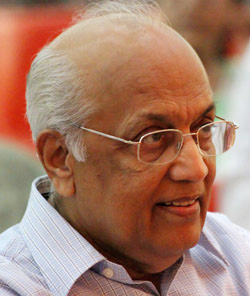
Grace Fellowship International India is conducting online counseling training (in English) this fall. John has taught on The Five Steps of Spirituotherapy and Distinctives of Exchanged Life Counseling. Rob Semco has taught on The Patterns of the Cross

GFI associates in India that are teaching include Dr. Alex Matthew and John Zachariah. (The character “Alex the branch” in Mike Well’s children’s book, The Gardener’s Love, is named in honor of Alex Mathew.)

Some of these videos are available at their YouTube channel: https://www.youtube.com/@gracecounseling2989

May God bless this online training and expand the ministry of GFII / GCI. Their web site is GraceCounselor.org